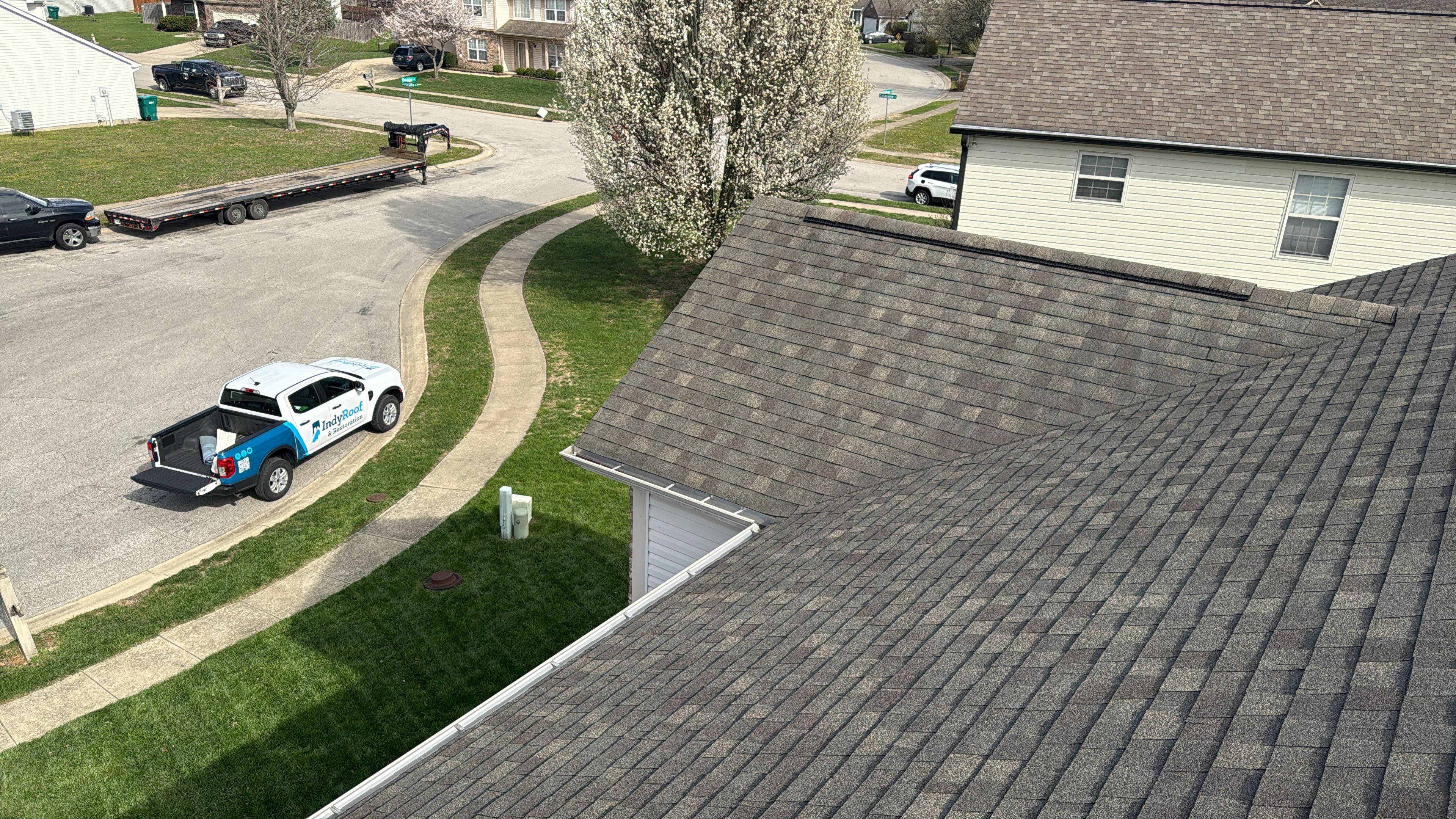
Quick Answer: It Depends on the Damage
Hail damage does not automatically mean a new roof, and most Rushville homeowners are relieved to learn that. Whether a home needs replacement, a repair, or no action comes down to four things: how severe the damage is, how widespread it is across the roof, how old the roof already was, and what kind of shingles are on it. Light surface marks that do not change how the roof sheds water often need nothing done. Fractured shingle mats spread across a whole slope usually point to replacement. Most real cases land somewhere in between and call for a repair. Because the damage that matters most is frequently hidden, the actual decision belongs to a professional inspection, and often an insurance adjuster, rather than to a glance from the driveway. Guessing in either direction tends to cost money, which is why the inspection comes first.
What Hail Actually Does to a Roof
Hail damages a roof in a handful of specific ways, and knowing them helps you understand any inspection report. It knocks the protective mineral granules off asphalt shingles, exposing the asphalt mat underneath to sun and weather that then age it quickly. It can bruise a shingle, which is a soft spot where the mat has fractured even though the surface still looks intact. Larger stones crack or split shingles outright, opening a direct path for water. Hail also dents soft metals around the roof, including gutters, downspouts, vents, and flashing. The dents on metal are usually the easiest damage to see and are what a homeowner notices first. The granule loss and the bruising on the shingles, though, are what actually shorten the roof's life and carry the most weight in the repair-or-replace decision, even when they are harder to spot.
How Insurance Looks at Hail
Hail is a sudden weather event, so homeowners insurance generally covers hail damage, in contrast to slow wear from age, which is typically excluded. After a storm you file a claim and an adjuster inspects the roof, often marking off a measured test square and counting the impacts inside it to gauge severity and spread. If functional damage is widespread enough, the insurer may approve a full replacement. If it is isolated, they may approve a repair instead. Two policy details then shape what you actually pay. Many policies carry a separate wind and hail deductible, sometimes set as a percentage of the home's insured value rather than a flat dollar figure, which can be sizable on a larger home. And the policy pays either actual cash value, which factors in the roof's age and depreciation, or replacement cost, which covers a new roof more fully. Both matter to the math.
Why Bruised Shingles Matter Even Without a Leak
A bruise is a fracture in the shingle mat, and it is the most underestimated hail damage there is. The roof may not leak at all in the weeks after the storm, which tempts a Rushville homeowner to assume everything came through fine. The trouble is that the fracture has quietly weakened the shingle, and over the following seasons that spot loses its remaining granules faster, cracks under normal temperature swings, and eventually opens a path for water. So a roof can be sound the day after the storm and failing within a year or two, with the damage spread across a whole slope the entire time. That delayed timeline is exactly why bruising gets dismissed and why it is dangerous. By the time the leak appears, the claim window may have closed and the damage may have spread well beyond where it started.
How Roof Age and Shingle Type Factor In
The same hail does more harm to some roofs than others, and the roof's age is a big part of why. An older roof with already-thinning granules and brittle shingles takes hail damage harder and was closer to replacement to begin with, so a single storm can push it over the line. Shingle type layers onto that. Standard three-tab shingles are thinner and more vulnerable than heavier architectural shingles, and impact-resistant shingles rated Class 4 are engineered to withstand more before the mat fractures. A newer roof with impact-resistant shingles might shrug off a storm that would total an older three-tab roof on the next street. So when an inspector weighs the damage, the roof's starting condition and the shingles on it set the baseline that the hail then acts on, which is why two homes from the same storm can need very different things.
Functional vs Cosmetic Damage
This single distinction drives almost every hail decision, so it is worth getting straight. Functional damage affects how the roof performs: granule loss that exposes the mat, a fractured mat that will fail early, or a puncture that lets water through. Cosmetic damage changes appearance without changing function, like a shallow dent on a metal vent that still sheds water perfectly well. Functional damage is what justifies a repair or a replacement and what homeowners insurance is most likely to cover. Cosmetic damage often gets left alone, and a number of policies now specifically exclude it from coverage. A roofer or an adjuster inspects the roof to sort one from the other, because the line between them is not always obvious to an untrained eye. Where your damage falls on that line largely determines both what you should do and whether a claim has a basis.
What to Do After a Hailstorm
Move quickly, because claim windows close and damage worsens the longer it sits. Start with the signs you can spot safely from the ground: granules collecting in the gutters or at the bottom of the downspouts, and fresh dents on metal vents, gutters, and flashing. Do not climb onto the roof to inspect it yourself, since bruising is hard to read without training and a storm-hit roof can be unsafe to walk. Instead, schedule a professional roof inspection even when there is no leak, and have any damage documented with dated photos that tie it to the storm. If the inspection finds functional damage, start the insurance claim promptly rather than waiting to see whether a leak develops. Acting in time is what keeps every option open for a Rushville homeowner, whether that turns out to be a repair, a replacement, or simply a clean bill of health. Because the extent of hail damage varies, a professional assessment is the dependable way to determine whether repair or replacement makes sense. Rather than assuming the outcome, having a professional evaluate the damage clarifies what your roof actually needs. Whether a roof needs repair or replacement after hail depends on the damage, which a professional can assess for your situation. A professional who has inspected the roof can explain the extent of any hail damage and the appropriate response. Because an insurance claim may be involved with significant hail damage, a professional assessment can help you understand the situation. For a clear answer on whether your roof needs repair or replacement after hail, a professional assessment is the reliable guide. Because the extent of hail damage varies, a professional assessment is the dependable way to determine whether repair or replacement makes sense.